
Internal knowledge with RAG
Assistants that retrieve policies, procedures and private documentation with semantic search and traceable sources.
I connect AI agents to APIs, documentation and internal processes through RAG, MCP and controlled tools — with security, permissions, auditability and an architecture your team can maintain.
Calling a model is the easy part. The real work is connecting it to real systems without losing control, security or traceability.
Assistants that retrieve policies, procedures and private documentation with semantic search and traceable sources.
I connect models to APIs and services through MCP or function calling so they can query live data and execute controlled actions.
Scopes, tool-level authorization, deterministic validation and action logs so the model is never the final authority.
I do not replace what already works: AI capabilities are layered over existing backends while business logic stays outside the model.
AI interprets intent and requests tools. The backend validates permissions, executes operations and keeps authority over data and business rules.
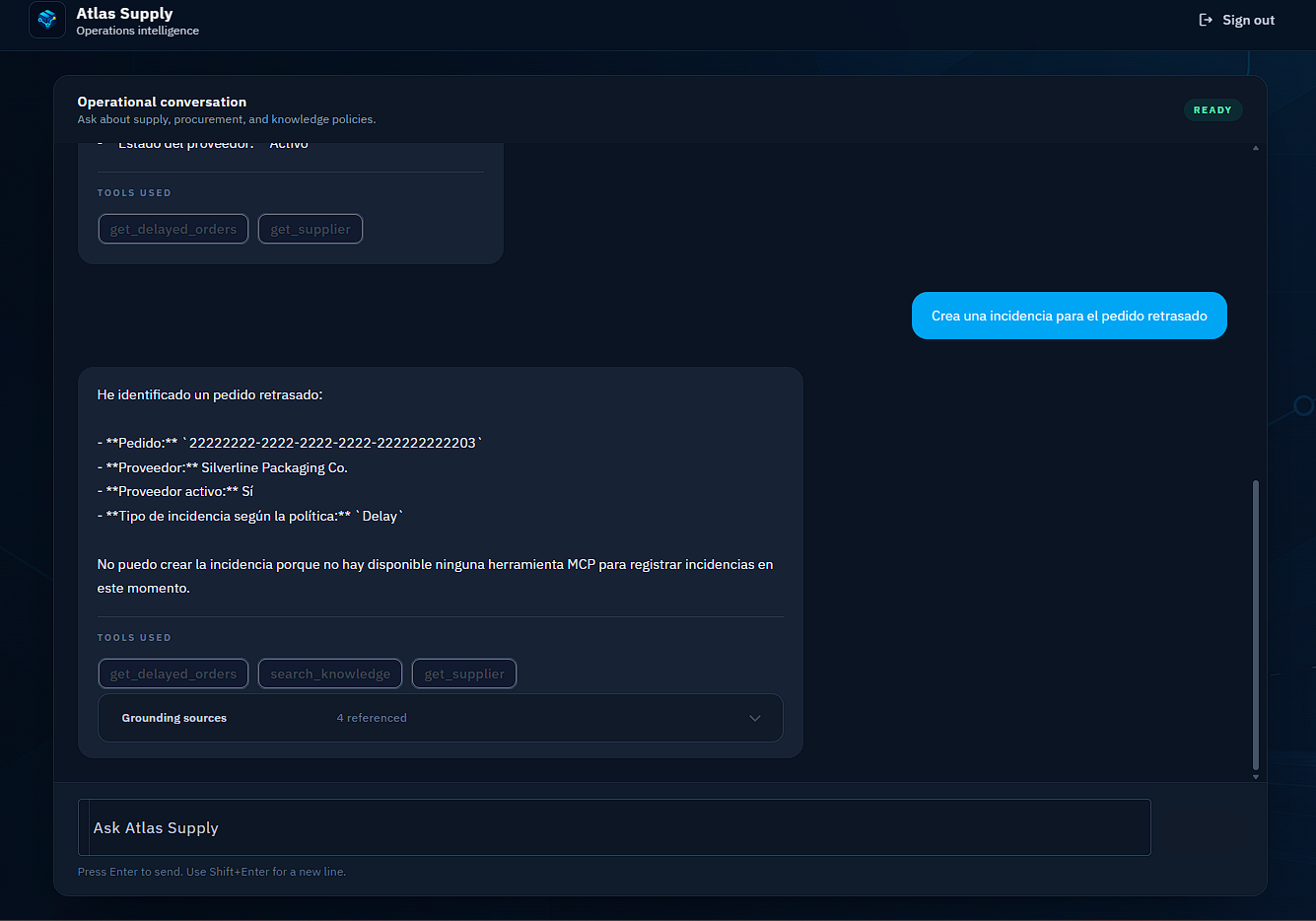
An end-to-end demo combining operational data, internal knowledge and actions protected by capability scopes. The agent decides when to use RAG, MCP or both.
Understand the process, systems involved and where AI can create measurable value.
Build the smallest useful case over real data and APIs to validate value, cost and risk.
Connect tools, knowledge, permissions, observability and user experience.
Security, auditability, tests, deployment and iteration until the solution is maintainable.
The model does not receive credentials or direct database access. It requests capabilities; the backend decides what is allowed and executes each action under deterministic rules.
No. The approach is to expose controlled capabilities over the existing architecture and keep business logic in software rather than in prompts.
No. RAG fits relatively stable knowledge; MCP/tools fit live data and actions. Real systems often benefit from combining them.
It should not. The model requests tools; the backend validates and executes them, returning only the result it needs.
Yes. A concrete workflow, one knowledge source and a small tool set is the right way to validate value before expanding scope.
No. The model provider should be abstracted so the business is not tightly coupled to a single vendor.
No endless sales deck: tell me the context, we identify whether there is a real use case, and decide what a sensible next step looks like.